 John Wesley Brooks
Should you wait for mortgage rates to drop before buying or selling a home in Huntsville or Madison, Alabama?
Waiting for lower mortgage rates can make sense if today’s payment doesn’t fit your budget. But waiting could also mean missing opportunities to negotiate on home prices, closing costs, and seller incentives in the current North Alabama housing market. The better decision depends on your finances, timing, and what homes are actually selling for in your preferred area.
If you’ve been watching mortgage rates lately, you’re probably asking the same question I hear from buyers and homeowners throughout Huntsville, Madison, Athens, and surrounding North Alabama communities:
Should I make a move now, or would I be better off waiting until rates come down?
It’s a reasonable question.
After more than 23 years helping people buy and sell real estate in North Alabama, I’ve learned that the best real estate decisions rarely come from trying to predict exactly what the market will do next.
They come from understanding your options.
And right now, there are five things I believe every buyer and seller should consider before putting their plans on hold.
1. Mortgage Rates May Not Drop as Quickly as You’re Hoping
One of the biggest misconceptions I hear is that mortgage rates are bound to fall significantly in the next few months.
They might decline. But there’s no guarantee they’ll fall far enough, or quickly enough, to change your buying decision.
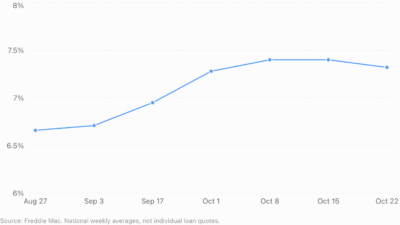
According to Freddie Mac’s Primary Mortgage Market Survey, the average 30-year fixed mortgage rate was 7.32% on October 22, 2026, compared with 6.66% on August 27.
That movement happened in less than two months.
30-year fixed mortgage rate, weekly U.S. averages
What does a lower mortgage rate actually save you?
Let’s look at a simple example.
Assume you’re financing $400,000 with a 30-year fixed mortgage.
| Interest rate | Monthly principal and interest |
|---|---|
| 7.4% | $2,770 |
| 6.5% | $2,528 |
| Difference | About $242/month |
That’s roughly $2,900 per year in potential savings.
Those savings are meaningful. But the question isn’t simply whether a lower rate would help.
It’s whether waiting for that rate is worth the uncertainty.
Calculate your potential mortgage savings
Calculate Your Potential Mortgage Savings
Adjust the loan amount and interest rates to compare estimated monthly principal and interest payments.
Illustration only. Assumes a 30-year fixed-rate mortgage (360 payments). Estimates are principal and interest only; excludes taxes, insurance, mortgage insurance, HOA dues, fees and closing costs. Actual rates and loan terms depend on your financing.
What this means for Huntsville and Madison buyers
If you’re relocating to Huntsville for work at Redstone Arsenal, Cummings Research Park, NASA Marshall Space Flight Center, or another local employer, you may not have the flexibility to wait indefinitely.
You might have a lease ending, a home to sell in another state, or a relocation deadline.
If that’s your situation, it makes more sense to establish a monthly payment you’re comfortable with today rather than build your entire moving plan around a mortgage rate that may or may not materialize.
My advice: If you’re planning to purchase within the next 6–12 months, understand today’s numbers first. A lower rate should be a potential bonus, not the foundation of your entire plan.
2. When Mortgage Rates Drop, More Buyers May Return to the Market
Here’s something many buyers overlook.
You’re probably not the only person waiting for lower mortgage rates.
And when rates become more attractive, some of those buyers may start looking again.
That can change the negotiating environment.
According to the National Association of REALTORS®, pending home sales declined 7.3% in September 2026 compared with the previous month and 11.3% compared with September 2025.
That tells us many buyers are holding back.
But when mortgage rates decline enough to improve affordability, buyer demand could increase.
Why could waiting make buying more competitive?
Imagine you’re searching for a four-bedroom home in Madison, Alabama, priced between $400,000 and $500,000.
Today, you may find properties that have been sitting on the market long enough for sellers to consider negotiating.
Depending on the home, you might be able to discuss:
-
A lower purchase price.
-
Contributions toward allowable closing costs.
-
A mortgage-rate buydown.
-
Repairs or other contract terms.
Now imagine mortgage rates decline enough to bring more buyers into that same price range.
Some homes may begin receiving offers more quickly. Sellers may become less willing to negotiate, especially for desirable properties with limited comparable inventory.
Of course, lower rates could also encourage more homeowners to list, increasing your choices. The net effect will depend on how supply and demand change locally.
What about the Huntsville housing market?
This is where local market information matters.
Consider the September 2026 MLS figures for Madison County and Athens–Limestone County.
| September 2026 | Madison County | Athens–Limestone |
|---|---|---|
| Homes on market | 2,814 | 1,087 |
| Homes sold | 627 | 228 |
| Average days on market | 41 | 60 |
| Average sales price | $335,000 | $336,000 |
| Pending sales | 928 | 334 |
Source: September 2026 local MLS market statistics supplied by The Brooks Family of REALTORS®. County-level figures; conditions vary by community, price range and property type.
These numbers tell us that buyers have inventory to consider, but they don’t tell the entire story.
A home in Madison’s 35758 ZIP code can experience very different demand from a property in Harvest’s 35749 ZIP code or a luxury home in Huntsville’s 35802 ZIP code.
Price range, condition, location, competing new construction, and days on market all matter.
My advice: Don’t assume waiting automatically gives you a better deal. Sometimes the quieter market provides negotiating opportunities that disappear when more buyers return.
3. Lower Mortgage Rates Don’t Automatically Mean Your Home Will Sell for More
This one is especially important for homeowners thinking about selling.
I hear a variation of this question regularly:
Should I wait until mortgage rates drop so I can get more money for my house?
It’s understandable.
Lower mortgage rates can improve affordability, which may encourage more buyers to enter the market.
But that doesn’t guarantee your home will increase in value by the same amount, or that you’ll receive a higher offer simply because rates have declined.
What actually determines your home’s value in Huntsville?
Your home’s market value depends on what buyers are willing to pay for comparable properties in your area.
That includes factors such as:
-
Recent comparable closed sales.
-
Active listings competing with your property.
-
Pending sales and buyer activity.
-
Condition, updates and floor plan.
-
Lot size, outdoor living and garage capacity.
-
New construction options at similar price points.
For example, if you own a home in Lake Forest in Huntsville’s 35824 ZIP code, your competition may include other resale homes in the community as well as newer properties elsewhere in the same general price range.
If you own a home in Madison’s 35758 ZIP code, buyers may compare your property with existing homes and new construction in neighboring communities.
That competition doesn’t disappear simply because mortgage rates decline.
Could lower rates help your home sell faster?
Potentially.
A lower mortgage rate may expand the number of buyers who can afford your price range.
But more buyer activity does not always mean a higher sale price.
If additional sellers list their properties at the same time, buyers may still have several choices.
That’s why I recommend looking at the actual numbers in your subdivision and ZIP code rather than relying entirely on national housing predictions.
My advice for sellers: If you’re waiting solely because you believe lower mortgage rates will substantially increase your home’s value, get a current comparative market analysis first. You may discover that selling now is more practical than waiting for an uncertain price increase.
4. Buyers May Have More Negotiating Power Right Now
This is one of the most overlooked parts of the current housing market.
While many people focus entirely on interest rates, they miss what’s happening with buyer negotiating power.
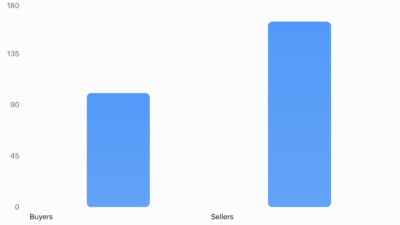
An October 2026 report from Redfin found that nationally, there were approximately 63% more home sellers than buyers in September.
That was the largest gap in Redfin’s records dating back to 2013.
National estimated sellers per 100 buyers, September 2026
Redfin also reported that approximately 21% of active sellers reduced their asking prices during the four weeks ending September 20, 2026.
What does that mean for you?
If you’re financially prepared to buy, there may be opportunities to negotiate that weren’t available when inventory was tighter and buyers faced more competition.
Where should Huntsville buyers look for opportunities?
In my experience, the best opportunities aren’t necessarily the homes with the largest advertised price reductions.
Sometimes they’re properties where the seller’s situation and current market conditions create room for a reasonable agreement.
For example, you might find opportunities among homes that:
-
Have been listed longer than similar nearby properties.
-
Have experienced one or more price reductions.
-
Compete directly with new construction offering incentives.
-
Are vacant and available for a quicker closing.
-
Have sellers willing to consider concessions.
This applies across different price ranges, whether you’re searching for your first home, a move-up property, or a luxury home.
Three numbers I want buyers to understand
Before making an offer, I want to know:
Days on market: How long have comparable properties been listed before going under contract?
Price reductions: How many competing homes have lowered their asking prices, and by how much?
Sale-to-list-price ratio: What percentage of the final asking price are similar homes actually selling for?
These numbers can tell us much more about your negotiating position than a national headline.
A home sitting on the market for 75 days in one neighborhood might represent an opportunity. In another price segment, that could be completely normal.
My advice: Rather than waiting for prices to fall everywhere, focus on finding a property that fits your needs and determining whether the seller is willing to negotiate today.
5. You May Be Able to Negotiate a Lower Mortgage Rate Without Waiting
This is something I believe more Huntsville and Madison buyers should understand.
You don’t always have to wait for national mortgage rates to decline to improve your monthly payment.
Depending on the property, loan program, and seller’s willingness to negotiate, you may be able to structure an offer that includes a mortgage-rate buydown.
What is a mortgage-rate buydown?
A mortgage-rate buydown is a financing arrangement that reduces the interest rate or initial payment cost through an upfront payment.
There are two common approaches.
Permanent rate buydown: Discount points are paid upfront to obtain a lower interest rate for the life of the loan.
Temporary rate buydown: Funds are used to subsidize payments for an initial period, such as one or two years. The underlying mortgage rate remains unchanged, and payments increase when the temporary subsidy ends.
A seller may agree to contribute toward eligible buydown costs as part of the purchase contract, subject to loan-program restrictions.
Is a price reduction or mortgage-rate buydown better?
Let’s look at an illustrative purchase in Madison, Alabama.
Assume you’re considering a $450,000 home with 20% down and a 30-year fixed mortgage.
| Price reduction | Rate buydown | |
|---|---|---|
| Purchase price | $435,000 | $450,000 |
| Down payment | $87,000 | $90,000 |
| Loan amount | $348,000 | $360,000 |
| Interest rate | 7.4% | 6.9% |
| Monthly principal and interest | $2,409 | $2,371 |
In this example, the permanent rate buydown produces a monthly payment approximately $38 lower than the price-reduction option.
However, that doesn’t automatically make the buydown the better choice.
The $15,000 credit must actually be sufficient to obtain the illustrated rate, which depends on real loan pricing. A lower purchase price also means borrowing less, and the comparison changes if you refinance or sell before the loan is paid off.
You’ll want to compare the full cost of both options, not simply the first monthly payment.
Why this matters in North Alabama
In some Huntsville-area communities, buyers are comparing resale homes with new construction properties.
Builders may offer incentives toward financing or closing costs. Individual resale sellers may also consider concessions to make their properties more competitive.
The key is understanding which incentive provides the greatest financial benefit for your situation.
A lower rate, a lower purchase price, or assistance with allowable closing costs can each make sense under different circumstances.
My advice: When you find the right home, don’t focus exclusively on the advertised asking price. Evaluate the complete offer, including financing costs, concessions, and your expected length of ownership.
When Does Waiting for Mortgage Rates to Drop Actually Make Sense?
I don’t believe everyone should buy a home right now.
And I certainly don’t believe someone should stretch their finances simply because a house is available.
Waiting may be the right decision if today’s housing payment doesn’t comfortably fit your budget, even after considering available concessions.
It may also make sense if your employment, relocation timeline, or other important plans are uncertain.
For homeowners with an existing mortgage at a substantially lower rate, moving may create a significant increase in monthly housing costs. That deserves careful consideration.
The important thing is to make your decision based on your circumstances rather than trying to time the market perfectly.
What could waiting 12 months actually cost?
Consider a $450,000 home with 20% down.
Assume today’s mortgage rate is 7.4%, but you hope rates decline to 6.5% next year.
If the home’s price increases by 3% while you wait, the purchase price becomes $463,500.
| Buy now | Buy in 12 months | |
|---|---|---|
| Purchase price | $450,000 | $463,500 |
| Interest rate | 7.4% | 6.5% |
| Down payment (20%) | $90,000 | $92,700 |
| Monthly principal and interest | $2,493 | $2,344 |
Waiting would lower the illustrated monthly principal and interest payment by approximately $149.
But you would also need an additional $2,700 for the down payment, and if you were renting for $2,200 per month, you would pay $26,400 in rent during that year.
That doesn’t automatically mean buying now wins. Owning also involves taxes, insurance, maintenance, transaction costs, and other expenses, while waiting can preserve flexibility and cash.
The example simply shows why you should evaluate the entire financial picture.
What Should You Do If You’re Buying or Selling in Huntsville in 2026?
Here’s how I’d approach the decision depending on your situation.
If you’re a first-time buyer in Huntsville or Madison
Start with a realistic monthly payment, not just the maximum home price you may qualify for.
Look at neighborhoods and price ranges where you can comfortably afford the total cost of ownership.
Then compare available homes, recent sales, and possible seller concessions.
If you’re relocating to Huntsville for work
Start with your commute and lifestyle priorities.
Someone working at Redstone Arsenal may evaluate locations differently from someone working in Cummings Research Park, downtown Huntsville, or Huntsville Hospital.
You may want to compare Madison, South Huntsville, Lake Forest, Harvest, Athens, and other communities based on your specific work location, housing budget, and daily travel needs.
If you’re relocating from Colorado Springs, Northern Virginia, Texas, or another market, it’s especially important to understand how North Alabama’s housing options differ from what you’re accustomed to.
If you’re selling a home in Madison County or Limestone County
Don’t assume that waiting for lower mortgage rates will automatically result in a higher selling price.
Start with an updated comparative market analysis that considers your subdivision, ZIP code, condition, and direct competition.
If you also plan to buy another property, compare both sides of the transaction.
The right selling decision depends on what you could net from your current home and what your next home would actually cost.
Frequently Asked Questions About Mortgage Rates and the Huntsville Housing Market
1. Will mortgage rates go down in 2027?
They could, but no forecast can guarantee when or how far mortgage rates will decline. Economic conditions, inflation, bond markets, and Federal Reserve policy can all influence borrowing costs. It’s better to plan around current affordability and treat future declines as uncertain.
2. Should I buy a house in Huntsville now or wait until 2027?
That depends on your budget, timing, and available housing options. If you can comfortably afford a home today and find a property that meets your needs, waiting may not provide a better outcome. If the payment is too high or your plans are uncertain, waiting may be more appropriate.
3. Is the Huntsville housing market a buyer’s market in 2026?
Conditions vary by ZIP code, subdivision, and price range. September 2026 figures show substantial inventory in Madison County and Athens–Limestone County, but inventory alone doesn’t establish whether every local segment favors buyers. Recent comparable sales and competing listings provide a more useful answer.
4. Will Huntsville home prices drop when mortgage rates remain high?
Higher mortgage rates can reduce affordability and demand, but they don’t guarantee falling prices. Local employment, inventory, new construction, and buyer preferences also influence Huntsville-area home values.
5. Is Madison, Alabama, more competitive than Huntsville for homebuyers?
Some Madison neighborhoods and price ranges may experience stronger competition than comparable Huntsville areas, while others may have more available inventory. Comparing recent sales, days on market, and current listings provides a better answer than relying on citywide assumptions.
6. Can I negotiate closing costs when buying a home in Alabama?
Yes. Sellers may agree to contribute toward eligible buyer closing costs, subject to the purchase agreement and applicable financing rules. Whether a seller accepts depends on market conditions and the overall offer.
7. What is the difference between a temporary and permanent mortgage-rate buydown?
A temporary buydown subsidizes mortgage payments for an initial period. A permanent buydown reduces the contractual interest rate through upfront discount points. The costs, benefits, and eligibility requirements differ.
8. Should I wait to sell my Huntsville home until rates decline?
Not necessarily. Lower rates could bring more buyers, but they could also encourage more sellers to list. Your decision should consider current comparable sales, your property’s competition, and your reasons for moving.
9. Can I refinance if mortgage rates fall after I buy?
Potentially, if you qualify and refinancing makes financial sense. Refinancing is not guaranteed, and it typically involves costs. You should be comfortable with your original payment rather than relying on a future refinance.
10. Are new construction homes in Huntsville offering mortgage incentives?
Some builders offer financing or closing-cost incentives, but availability and terms vary by builder, community, and property. Compare the full purchase price and financing terms with competing resale homes before deciding.
11. What are the best areas near Redstone Arsenal for homebuyers?
Areas worth comparing may include Madison, Lake Forest and the Zierdt Road corridor, South Huntsville, Harvest, and parts of Athens. The most practical choice depends on your assigned gate, budget, housing needs, and preferred commute.
12. How do I know if a Huntsville home is overpriced?
Compare the property with recent closed sales of similar homes, including size, age, condition, location, garage capacity, lot characteristics, and upgrades. Active competition and days on market can provide additional context.
Final Takeaway: Don’t Let Mortgage Rates Make the Entire Decision for You
If there’s one thing I want you to remember, it’s this:
The best time to buy or sell a home isn’t necessarily when mortgage rates reach a certain number. It’s when the numbers, the property, and your personal circumstances make sense together.
For some buyers in Huntsville and Madison, waiting is absolutely the right move.
For others, today’s inventory and negotiating opportunities may make moving now worth considering.
And for homeowners thinking about selling, the decision should start with what your property is worth in the current market, not what you hope it might be worth after mortgage rates change.
After 23+ years in North Alabama real estate, I’ve seen enough market cycles to know that trying to predict the perfect moment is difficult.
Understanding your options is far more useful.
Thinking About Buying or Selling in Huntsville or Madison, Alabama?
Before you put your plans on hold, let’s look at your actual numbers.
I can help you understand what comparable homes are selling for, where buyers may have negotiating opportunities, and how current market conditions could affect your next move.
Whether you’re buying your first home, relocating to Huntsville, purchasing new construction, or preparing to sell your current property, the goal is the same: make a decision based on reliable information and a plan that works for you.
The Brooks Family of Realtors has been serving the North Alabama and Tennessee families since 1972.
| Contact 256-797-2283 | [email protected] |
www.johnwesleybrooksrealestate.com
Find me Here: Google Business Profile | Facebook | Instagram | LinkedIn | Twitter | YouTube | Realtor.com | Zillow