
Thinking about selling a home you’ve owned for 10, 20 or even 30 years? Here’s what you should know before spending money on repairs, renovations or preparing to move.
Selling a home you’ve lived in for decades is different from selling a house you bought just a few years ago.
You’ve probably made improvements, replaced appliances, updated rooms, planted trees and collected a lifetime of memories.
But here’s something I tell homeowners throughout Huntsville, Madison and North Alabama:
Before you spend thousands of dollars getting your house ready to sell, find out what today’s buyers actually care about.
I’ve been a full-time REALTOR® for more than 23 years, and one of the biggest mistakes I see sellers make is assuming every improvement will increase their home’s value.
It doesn’t always work that way.
Sometimes a fresh coat of paint is a better investment than an expensive renovation. Sometimes an old roof becomes a bigger issue than an outdated kitchen. And sometimes the most difficult part of selling has nothing to do with the house itself.
If you’re thinking about selling your longtime home in Huntsville or Madison, here are seven things worth understanding before you put it on the market.
1. Home Improvements Without Permits Can Create Problems Later
Let’s say you bought your home in South Huntsville 25 years ago.
Over the years, you finished part of the basement, added a deck, converted a garage or remodeled a bathroom.
Everything may look great.
But were permits required, and were they obtained?
That question can come up when a buyer orders an inspection, when the property is appraised or when a lender reviews the home.
An improvement that wasn’t properly permitted may create questions about safety, square footage, compliance or financing.
What I recommend:
Before listing, make a list of major projects completed over the years. Gather any permits, contractor invoices and inspection records you still have.
If you’re unsure whether something was permitted, we can discuss the appropriate next step with the local building department.
The goal isn’t to create an unnecessary problem. It’s to identify potential issues before they surprise you during a sale.
2. Those Old Renovation Receipts Might Be Worth Keeping
This is one homeowners often overlook.
If you’ve owned your house for 20 years, think about the improvements you’ve made.
Maybe you replaced the roof, installed new windows, renovated the kitchen, added a room or replaced the HVAC system.
You might have spent tens of thousands of dollars over the years.
Some qualifying improvements can increase your property’s adjusted tax basis, potentially reducing the taxable gain when you sell.
But here’s the important distinction:
Repairs and maintenance aren’t automatically treated the same as capital improvements.
The IRS has specific rules about what qualifies, and homeowners may also be eligible for an exclusion of gain on the sale of a primary residence.
That’s why I recommend gathering your records and speaking with a qualified tax professional before closing.
Even if you don’t have every receipt, old bank statements, invoices, warranty information or contractor records may help establish what was done.
Don’t throw away those old home-improvement folders just yet.
3. You May Not Need That Expensive Kitchen Remodel
This is where I see sellers spend money they may never recover.
Imagine you’ve lived in your Madison home for 18 years.
Your cabinets are solid, the countertops are dated and the kitchen needs some attention.
Should you spend $50,000 or more completely renovating it?
Not necessarily.
The national 2025 Cost vs. Value Report highlighted a major difference between minor and major kitchen improvements.
A minor kitchen remodel showed approximately 113% cost recovery, compared with approximately 51% for a major midrange kitchen remodel.
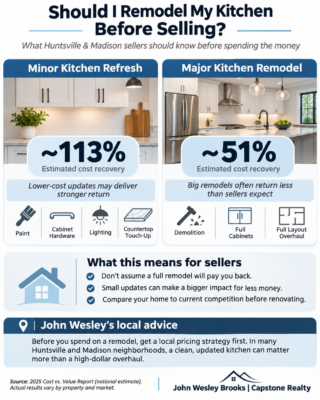

Those are national estimates, not guaranteed results for Huntsville or Madison, but they illustrate an important point.
Spending more doesn’t automatically mean receiving more when you sell.
Sometimes the better approach is updating cabinet hardware, improving lighting, repainting, refreshing countertops or replacing a few outdated appliances.
And sometimes the best decision is to sell the home without renovating the kitchen at all.
My recommendation: Let me evaluate the home and its current competition before you hire a contractor.
What makes sense in an established neighborhood like Blossomwood or Jones Valley may be very different from what makes sense in Madison, Harvest or Hampton Cove.
4. Your Roof’s Age May Matter More Than You Think
A homeowner might tell me:
“My roof doesn’t leak. Why would I need to worry about it?”
That’s a reasonable question.
But buyers aren’t only concerned about whether a roof leaks today.
They’re also thinking about future replacement costs, insurance coverage and the home’s overall condition.
Insurance companies may consider roof age, roofing materials and condition when determining eligibility and premiums.
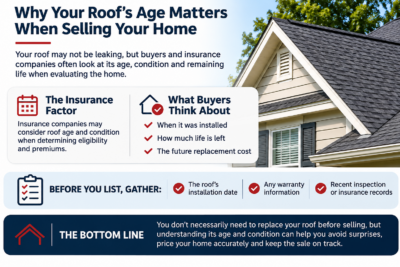

That means an older roof can influence a buyer’s decision even when there are no obvious leaks.
Before listing your home, find out when the roof was installed.
If you have the installation invoice, warranty or insurance documentation, keep it available.
If the roof is older or its condition is uncertain, it may be worth considering an inspection.
You don’t necessarily need to replace a roof before selling.
You do need to understand how its age and condition may affect pricing, negotiations and buyer financing.
5. A Quick Cash Offer Isn’t Always Your Best Offer
You’ve probably seen advertisements promising to buy your house quickly, without repairs, showings or traditional listing preparations.
For some homeowners, that convenience has real value.
Maybe you’ve inherited a property, need to relocate quickly or don’t want to manage repairs.
But convenience can come at a price.
An investor or cash-buying company typically needs enough room in the purchase price to account for repairs, holding costs, resale expenses and profit.
That doesn’t mean every cash offer is a bad offer.
It means you should compare the numbers.

For example, if an investor offers $350,000, but comparable homes suggest the property could bring more on the open market, we need to evaluate the actual difference after commissions, concessions, repairs, holding costs and other expenses.
The highest advertised price isn’t always the highest net proceeds.
And the fastest offer isn’t automatically the best financial decision.
My advice: Before accepting an unsolicited cash offer, get an accurate local market analysis.
Then compare what you would actually walk away with under each option.
6. Selling a Home Built Before 1978 Comes With an Additional Requirement
This matters for many established homes throughout Huntsville and Madison.
If your home was built before 1978, federal lead-based paint disclosure rules generally apply to the sale of most residential properties.
Sellers must disclose known information about lead-based paint and related hazards, provide available records and reports, and supply the required federal information pamphlet.
Buyers generally receive a 10-day opportunity to conduct a lead inspection or risk assessment unless the parties agree to modify that period or the buyer waives it.
This does not automatically mean you must remove lead-based paint or hire someone to test the home before selling.
But the required paperwork matters.
If your home is in an established Huntsville neighborhood, especially one with houses built during the 1950s, 1960s or 1970s, we should address this early in the listing process.
The last thing you want is missing paperwork creating an avoidable delay.
7. The Hardest Part of Selling May Be Letting Go of Your Things
This might be the most overlooked part of the entire process.
When you’ve lived in a house for 20 or 30 years, you’re not simply moving furniture.
You’re going through closets, family photographs, holiday decorations, children’s belongings, tools, storage buildings and decades of memories.
And it can be overwhelming.
I’ve worked with longtime homeowners who needed time to decide what to keep, what to donate and what should go to another family member.
That’s normal.
But I strongly recommend starting this process before the house goes on the market.
You don’t have to empty the entire house in one weekend.
Start with a closet, an attic or a room you rarely use.


Sort belongings into four groups:
- Keep: Items you want in your next home.
- Sell: Furniture and belongings with resale value.
- Donate: Useful things you no longer need.
- Let go: Items that are damaged, outdated or no longer useful.
As you clear space, the house becomes easier to photograph, show and prepare for buyers.
One thing I emphasize when preparing listings in Huntsville and Madison is that buyers often see your home online before they ever schedule a showing.
Good photography matters, and less clutter allows buyers to appreciate the actual rooms.
That doesn’t mean removing everything that makes your house a home.
It means presenting the space so another buyer can picture living there.
What Should You Fix Before Selling a Home in Huntsville or Madison?
Here’s where I recommend starting.
Not with a renovation budget.
Not with a contractor.
And not with a list of improvements you assume buyers will want.
Start with a thorough evaluation of your property and the competing homes currently available.
I look at the home’s location, subdivision, ZIP code, size, condition, lot, garage capacity, upgrades and current market competition.
For example, a longtime homeowner in South Huntsville may own a ranch-style property with mature trees and a half-acre lot.
A similar-priced home in Madison might be newer but have a smaller lot.
Those homes may appeal to buyers for different reasons.
The goal is to understand what makes your property competitive, then spend money only where it makes sense.
Sometimes that’s flooring or paint.
Sometimes it’s improving landscaping or addressing maintenance.
And sometimes the house is already in a position to sell without major improvements.
Frequently Asked Questions About Selling a Longtime Home in North Alabama
Should I remodel my house before selling it in Huntsville?
Not automatically. Some updates improve marketability, but a major renovation may cost more than buyers are willing to pay for it. Start with a local market evaluation.
Is it better to sell my home as-is or make repairs?
That depends on the condition, price range, location and competition. An as-is sale may save time and expense, while selective repairs may help attract more buyers or improve your net proceeds.
Do I need to replace an old roof before selling?
Not necessarily. Roof age and condition can affect buyer confidence, insurance and negotiations, so it’s important to evaluate them before listing.
Do I need permits for improvements made years ago?
Permit requirements depend on the work and local jurisdiction. Review your records and consult the appropriate building department when needed.
Can home improvements reduce taxes when I sell?
Some qualifying capital improvements can increase the home’s adjusted basis. The tax treatment depends on your circumstances, so consult a qualified tax professional.
Are cash offers better than listing with a REALTOR®?
Cash offers may offer speed and convenience. A traditional listing may expose your home to more buyers. Compare the estimated net proceeds and terms rather than relying only on the offer price.
Do I need to disclose lead-based paint when selling an older home?
Federal disclosure requirements generally apply to most residential properties built before 1978. Sellers must follow the applicable disclosure process even if they have no knowledge of lead-based paint.
How early should I start preparing my home for sale?
If you’ve owned the home for decades, starting several months before listing can make organizing, repairs and moving easier.
What improvements help a home sell in Madison Alabama?
That depends on the property’s competition. Fresh paint, clean flooring, appropriate maintenance, attractive landscaping and professional photography can improve presentation without requiring a complete renovation.
Who can help me prepare my longtime Huntsville home for sale?
An experienced local REALTOR® can help evaluate the home’s condition, current market competition, likely buyer expectations and potential return on improvements before you commit to major expenses.
Thinking About Selling a Home You’ve Owned for Years?
If you’ve lived in your home for 10, 20 or 30 years, you may not know how much your property is worth in today’s Huntsville or Madison real estate market.
And you certainly shouldn’t have to guess which updates are worth making.
I’m John Wesley Brooks, REALTOR® with Capstone Realty, a third-generation Huntsville native with more than 23 years of full-time real estate experience.
I help homeowners throughout Huntsville, Madison, Athens, Harvest, Hampton Cove and surrounding North Alabama communities understand how their property compares with today’s market.
Before you spend thousands of dollars preparing to sell, let’s discuss what matters most to buyers in your neighborhood.
Call or text me at 256-797-2283 or visit www.johnwesleybrooksrealestate.com to discuss your home’s value and a practical selling strategy.
Let’s make a plan before you spend the money.
The Brooks Family of Realtors has been serving the North Alabama and Tennessee families since 1972.
| Contact 256-797-2283 | Johnwesleybrooks@choosecapstone.com |
www.johnwesleybrooksrealestate.com
Find me Here: Google Business Profile | Facebook | Instagram | LinkedIn | Twitter | YouTube | Realtor.com | Zillow