
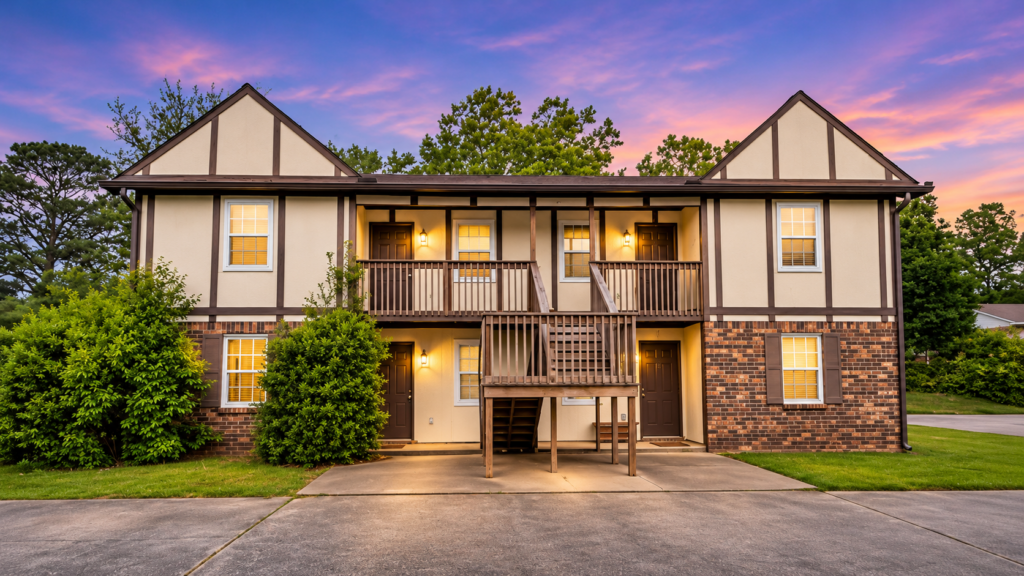
The real question is whether this specific building earns what the seller says it does. Start by matching rent rolls to bank deposits, then test the expenses, system ages, flood and zoning status, and management scope. Market averages only frame the decision. The property’s own documents answer it.
Huntsville-Area Multifamily Property Review Before Buying
What should you review before buying a Huntsville-Area Multifamily Property?
Before you buy a Huntsville-area multifamily property, verify the income against bank deposits, rebuild the expenses yourself, get remaining-life estimates on every major system, check flood and zoning status on the exact parcel, and price the management the building actually needs. A September 2026 report put market-wide apartment occupancy at roughly 86%, so build a downside case, not just a stabilized one.
Key Takeaways
- A September 2026 AL.com report put Huntsville’s market-wide apartment occupancy at approximately 86%, rising since early 2026 but still in an absorption phase.
- As of mid-2026, 34 completed properties still in initial lease-up averaged 61.2% occupancy, which means roughly 3,300 vacant units competing with your acquisition.
- The Q3 2026 TenantBase report cited about 930 projected 2026 deliveries versus 4,680 units delivered in 2025, so new supply is easing but has not disappeared.
- Physical occupancy can look strong while economic occupancy is weak, so reconcile the rent roll to bank deposits, delinquency, and concessions before you trust the seller’s numbers.
- Flood status and zoning must be confirmed on the exact parcel, and the City of Huntsville states that its online zoning map is not the official zoning map.
How does the 2026 Huntsville apartment market change what you underwrite?
It means you should assume tenants have options and underwrite concessions, not just advertised rents. The Huntsville apartment market has been working through a heavy supply wave, and the most recent figures I have are dated, so I treat them as inputs to test, not as a forecast.
| Market measure | Reported figure | Source and date |
|---|---|---|
| Market-wide occupancy | Approximately 86% | AL.com, September 2026 |
| Average occupancy, 34 properties in initial lease-up | 61.2% (about 3,300 vacant units) | AL.com, mid-2026 |
| Units in the development pipeline | 1,275, the smallest in more than five years | AL.com, as of June 2026 |
| Projected 2026 deliveries vs. 2025 deliveries | About 930 vs. 4,680 | TenantBase, Q3 2026 |
| Units under construction | 1,573 across 12 properties | TenantBase, Q3 2026 |
The AL.com report describes an apartment glut that is nearing its end, not one that is over. That is a useful distinction when you price a building.
Underwrite by submarket, not by metro average
Compare the property to the communities it will actually compete with. Depending on the building, that could mean Madison/Airport, Limestone County, University/Research Park, or another Huntsville-area submarket. For your unit type and age, pull asking rents, effective rents after concessions, occupancy, renewal rates, days vacant, and nearby deliveries.
The lease-up numbers matter most here. A brand-new community sitting at 61.2% occupancy is motivated, and it may be offering free rent, waived fees, reduced deposits, or gift cards. Your tenants will see those offers. If you are buying from out of state, I’d rather you have someone who has walked these areas and knows which new developments are adding units. I wrote about that decision in Should I Buy Before Moving to Huntsville?
Build a property-specific downside case
Model slower lease-up, flat or lower effective rents, elevated concessions, higher insurance and utilities, a major replacement project, delinquency, and temporary vacancy during renovations. If the deal only works in the stabilized case, it is a bet on timing, not a sound purchase. The TenantBase Q3 2026 report shows supply shrinking, but conditions at your specific address are what you will live with.
How do you verify the income and expenses of a Huntsville-Area Multifamily Property?
Ask for the seller’s actual records and tie them together: rent rolls, general ledgers, and bank deposits should all tell the same story. If they don’t match, the asking price is built on a number you can’t rely on.
| Document to request | What it tells you | What to watch for |
|---|---|---|
| Monthly rent rolls | Who is paying what, and lease dates | Units listed as occupied but not paying |
| Bank deposit records | Cash actually collected | Deposits that don’t match the rent roll |
| General ledger | Real operating expenses by category | Missing categories or lumped-together entries |
| Delinquency aging and write-offs | Collection quality | Balances that keep rolling forward |
| Concession schedule | Real effective rents | Advertised rents propped up by incentives |
| Utility, insurance, and tax bills | True fixed and pass-through costs | Old bills that don’t reflect renewals |
Reconcile physical occupancy with economic occupancy
A building can report high physical occupancy and still collect weak revenue. Delinquency, concessions, model or employee units, vacant-ready units, and units offline for renovation all widen the gap. Ask for as many months of records as the seller has, and look for trends instead of a single good month.
Test the seller’s expense numbers
Rebuild the expense side line by line: water and sewer, other utilities, insurance renewals, property-tax bills, payroll, contract services, repairs, pest control, landscaping, turnover, marketing, legal costs, software, and management fees. Then separate recurring operating costs from deferred maintenance and one-time capital items. Sellers often present a low repair line as proof of a healthy building. In my experience, it can just as easily mean the repairs were put off.
Your tax situation, including whether a 1031 exchange is involved, is something to settle with your tax advisor early. I can help you line the property search up with your timeline.
What should you check on the building, the parcel, and the location?
Check the major systems, the flood status, and the zoning on the exact parcel, in that order of dollar risk. Each can change the price you should pay, and none of them shows up in a listing sheet.
Which systems carry the biggest replacement risk?
Get remaining useful-life estimates, ideally from qualified inspectors or contractors, on these items:
- Roofs, siding, and windows
- HVAC equipment, water heaters, and boilers
- Electrical distribution
- Plumbing supply and waste lines
- Parking lots, retaining walls, balconies, and stairs
- Fire alarms and access-control systems
For an older property, a low historical repair budget does not establish low future capital needs. Ask what has been replaced, when, and by whom, then ask for the paperwork. Together we can build a replacement schedule you can negotiate from.
How do you check flood risk?
Check the exact parcel, not the neighborhood label. Start with the City of Huntsville flood zone map, and review the FEMA flood map and flood-study information on the Madison County flood protection page. Look at the buildings, parking areas, stormwater routes, access roads, utilities, and mechanical equipment.
If any part of the site is in or near a regulated flood area, get current insurance quotes before you commit. The City’s floodplain development Q&A says development in a floodway must show through engineered modeling that it won’t raise floodwater elevations during the 1% annual-chance rainfall event. It also describes elevating primary structures and servicing equipment one foot above base flood elevation where applicable. Confirm what applies to your property with the City before you rely on it, especially if you plan improvements.
How do you verify zoning, parking, and expansion potential?
Use public maps to screen, then confirm with the City. The City of Huntsville interactive maps page states that its zoning map is not an official zoning map and directs you to the Planning Department. Before you pay for unit count, parking, an addition, or a change in use, get the official zoning district, permitted use, density, setbacks, and any nonconforming status in writing from Planning. The same maps page is a good place to scan for nearby changes, but it won’t settle the question.
How much management does a multifamily property really need?
More than the headline fee suggests if the building has high turnover, older systems, scattered buildings, delinquency, or after-hours maintenance calls. Decide the management model after you know how the property actually runs.
If you are weighing a third-party manager against self-managing a small property, compare proposals on scope, not price alone:
- Staffing and leasing coverage
- Maintenance response times and after-hours service
- Inspection frequency
- Technology and reporting
- Pass-through charges beyond the base fee
Self-managing can work for a small, well-kept building if you live close and have the time. It gets expensive in hours quickly when systems are old or turnover is high. Because I also work in property management, I can walk you through what a realistic management load looks like for the specific building you are considering.
Every one of these checks is property-specific, which is why a local, building-by-building review beats broad market assumptions. If you want a second set of eyes on a deal, here is what to look for in a Huntsville agent. Closing is handled by a title company, and you should line that up early so title work and your lender’s timeline don’t collide with your due diligence.
Want to see how other clients felt about working with me? You can read reviews on Google, Zillow, and Realtor.com.
FAQ
How do I verify the actual rent roll and collections before buying an apartment property in Huntsville?
Compare the rent roll to bank deposits and the general ledger for as many months as the seller can provide. Then review delinquency aging, write-offs, and concessions. If collected cash doesn’t match what the rent roll says should have come in, find out why before you negotiate price.
Is Huntsville still a good market for buying a multifamily property in 2026?
It can be, but it depends on the building and the price. A September 2026 report put occupancy around 86% and said the pipeline had fallen to 1,275 units as of June 2026, the smallest in more than five years. Conditions are improving while excess supply remains, so buy only if the deal works with conservative lease-up assumptions.
Which Huntsville-area submarkets have the most competing apartment supply?
That varies by property type and age, so check deliveries and lease-up communities near the specific building. Compare areas such as Madison/Airport, Limestone County, and University/Research Park. I can pull the competing communities around a property you are considering.
What operating expenses are commonly underestimated when underwriting a multifamily property?
Insurance, utilities, turnover, and payroll are common trouble spots, along with repairs that were put off. Request actual bills and renewals instead of accepting the seller’s normalized figures, and separate recurring costs from capital items.
Should I hire a third-party property manager or manage a small multifamily property myself?
Base the decision on how much work the property really creates, not its size. High turnover, older systems, scattered buildings, delinquency, and after-hours maintenance all push toward professional management. Compare proposals on scope of services and pass-through charges, not just the headline fee.
The bottom line is that a multifamily purchase works or fails on the property’s own numbers, systems, parcel details, and management needs. I’ve spent more than 23 years helping buyers and investors in this market, and I’d be glad to look at your deal with you. Schedule a consultation and we’ll go through the property together.
Equal Housing Opportunity. John Wesley Brooks is a Licensed Real Estate Agent in Alabama (license AL-74782), Capstone Realty AL license #153754, regulated by the Alabama Real Estate Commission. This article is general information, not legal, tax, or financial advice. Confirm your own numbers with your title company, tax advisor, or lender.
The Brooks Family of Realtors has been serving the North Alabama and Tennessee families since 1972.
| Contact 256-797-2283 | Johnwesleybrooks@choosecapstone.com |
www.johnwesleybrooksrealestate.com
Find me Here: Google Business Profile | Facebook | Instagram | LinkedIn | Twitter | YouTube | Realtor.com | Zillow