
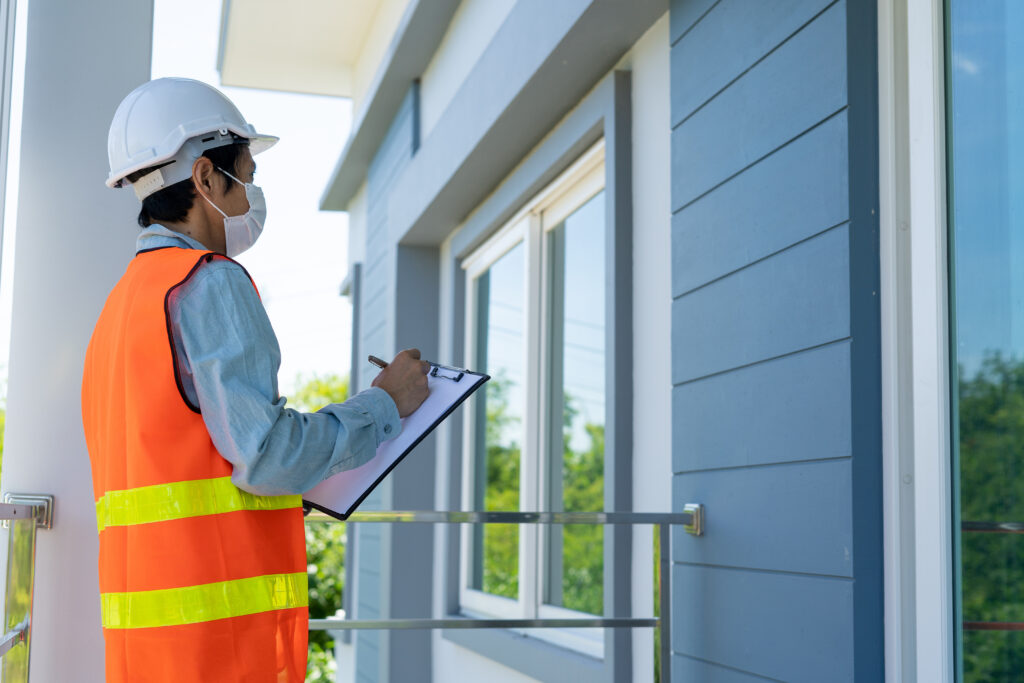
Radon testing is your call, not an Alabama mandate, so the real decision is timing. Madison County is rated high-potential, and a test takes at least 48 hours. Put the request in early enough that results and any negotiation fit inside your contract’s inspection deadline, and ask your lender whether it has its own conditions.
Buying a Huntsville-Area Home? Should You Test for Radon?
Should You Test for Radon Before Buying a Huntsville-Area Home?
Yes, in most cases it’s worth testing. Madison County is one of 15 Alabama counties the state lists as having the highest potential for elevated indoor radon, and the only way to learn a specific house’s level is to test it. Radon testing isn’t automatically required for every purchase, so when you’re buying a Huntsville-area home the real question is whether the test fits your inspection deadline and what you’ll do with the result.
Key Takeaways
- Madison County is one of 15 Alabama counties the Alabama Department of Public Health (ADPH) lists as having the state’s highest potential for elevated indoor radon, but that rating says nothing about any single house.
- A radon test is not a universal statewide requirement for Alabama home purchases, so whether you need one depends on your contract, any addendum, and your lender.
- ADPH’s transaction guidance calls for a short-term test of at least 48 hours and no more than 96 hours, or a certified professional using a continuous monitor for at least 48 hours.
- ADPH’s guidance says to fix the home when the applicable result is 4 picocuries per liter (pCi/L) or higher.
- Who pays for mitigation is whatever you negotiate in the contract, because no universal Alabama rule making the seller responsible was identified in the ADPH material.
Is radon testing required when buying a home in Huntsville?
No, not automatically. ADPH’s real-estate transaction guidance treats testing as a choice made by the buyer, seller, or both, not a blanket statewide mandate. Whether a test is required in your deal comes down to what your contract says and what your lender asks for.
That distinction matters, and I see buyers mix it up. There are three different reasons a radon test might happen:
- You choose it. It’s due diligence, the same way you’d decide to add a sewer scope or a wood-destroying insect report.
- The contract calls for it. This happens only if the purchase agreement or an addendum says so.
- The lender asks for it. This depends on the lender and the loan, so ask your loan officer directly and get the answer in writing.
| Where the question comes from | Does it require a radon test? | What you do |
|---|---|---|
| Alabama state guidance | Not a universal mandate for home purchases | Decide based on your own risk tolerance |
| Your purchase contract and addenda | Only if the document says so | Read the inspection terms and deadlines closely |
| Your lender | Depends on the lender and the loan | Ask your loan officer to confirm in writing |
| Your own due diligence | Your call | Request the test early in the inspection period |
Madison County’s high-potential rating is a screening classification, not a prediction. A house in Huntsville, Madison, Hampton Cove, or Harvest could test low or high, and the house next door could read differently. You can confirm your county’s classification on ADPH’s radon in Alabama page. That’s why I treat the county rating as a reason to test, not as a result.
How does radon testing fit into buying a Huntsville-area home?
Order the test at the start of your inspection period, not the end. ADPH’s guidance calls for a minimum of 48 hours of testing, and you still need time for the device or monitor to be read, plus any retest or negotiation if the number comes back high. Your contract, not a general rule, sets the deadline, so confirm it before you schedule anything.
If you’re deciding whether to inspect at all in a tight market, I wrote about whether to waive the inspection in Huntsville. Radon is one of the items that is easy to cut when you’re trying to compete, and it is also one you can’t see, smell, or judge by walking through the house.
Which testing approach should you choose?
You have three options under ADPH’s guidance for non-karst areas. ADPH also publishes separate guidance for karst areas, so ask your tester which protocol applies to the property you’re buying.
| Approach | Timing and equipment | How the result is handled |
|---|---|---|
| Two simultaneous short-term tests | At least 48 hours, no more than 96 hours | Results are averaged |
| Two sequential short-term tests | At least 48 hours, no more than 96 hours each | Results are averaged |
| Certified professional with a continuous monitor | At least 48 hours | The tester reports the result |
If you go with a professional, verify the tester’s credentials. Also confirm that the device and the report will satisfy your contract and your lender, so you don’t pay for a test that doesn’t count.
Where and how should the test be set up?
Placement and house conditions can change the reading, so these details matter:
- Location: the lowest level suitable for occupancy, meaning the lowest level that can be used as living space, finished or not, without renovation. In a house with a basement, that’s usually the lowest usable basement level.
- Places to avoid: bathrooms, kitchens, laundry rooms, crawl spaces, sumps, cupboards, nooks, and closets.
- Closed-house conditions: windows and exterior doors closed for at least 12 hours before the test starts and kept closed during it, apart from normal entry and exit.
- Weather: avoid testing during severe storms or high winds.
Those closed-house conditions are another reason to schedule early. A test that gets disrupted or runs in poor weather may need to be repeated, and you want that to happen inside your deadline, not after it.
What should you ask the seller?
Ask whether the home has prior radon results, whether it has a mitigation system, and whether the seller has records for that system. ADPH also has a real estate transactions document worth reading before you make requests. Old results give you context, but they may not reflect today’s conditions if the foundation, HVAC operation, ventilation, or the way the lower level is used has changed.
What does a high radon result mean for your purchase?
A result at or above 4 pCi/L is the point where ADPH’s non-karst guidance says to fix the home. For the two-test approaches, that figure applies to the average of the results. What you can do about it in your deal depends on your contract.
Who pays to fix radon?
Whatever you and the seller agree to in writing. The test identifies a potential health and property issue, and the purchase agreement determines whether you can ask for repairs, a credit, a price change, or another remedy. No universal Alabama rule making the seller responsible for mitigation was identified in the authoritative material I reviewed, so don’t assume one exists. Whatever you negotiate belongs in the contract or the applicable addendum, and your title company and real-estate professionals should see it documented.
Can you cancel the contract over a high result?
It depends on your contract’s inspection terms and whether you act inside the deadline. That is the main reason timing matters more than anything else in this post. A good result on day six of a five-day window doesn’t help you, and neither does a bad one. Read your inspection and termination language before you sign, and bring it to me if any of it is unclear.
What if the number comes back under 4?
A reading below 4 pCi/L is not a guarantee that radon is absent. If the number is close to the threshold or the test conditions were questionable, it’s reasonable to talk about a follow-up test.
What should you do after closing?
Treat the transaction test as a starting point. ADPH advises a 12-month confirmatory test immediately or soon after you move in. Its general guidance is to test every two years and to retest after structural changes, after moving into a previously unused level, or after other relevant changes in how the home is occupied.
How do you decide before you fall for the house?
I’d settle your inspection plan before you’re emotionally invested. I covered that mindset in what to do before you fall in love with a house in North Alabama. A radon test is easy to schedule and inexpensive compared with the size of the purchase, and the result gives you something concrete to talk about instead of a worry. If your inspection turns up other concerns, such as foundation problems, radon may become one item in a larger negotiation.
Every contract and every house is different, and this is the kind of decision I walk my clients through before we write an offer. Together we look at your deadline, your contract language, and what you’d want to do with each possible result, so you aren’t deciding under pressure on day four of the inspection period.
If you’d like to see how I work with buyers, you can read my reviews on Google, Zillow, and Realtor.com.
FAQ
Is radon testing required when buying a house in Huntsville, Alabama?
No, Alabama doesn’t require a radon test for every home purchase. ADPH presents testing as a choice for the buyer, seller, or both. Your contract, any addendum, or your lender could still make it a requirement in your particular deal.
How long does a radon test take during an Alabama home purchase?
A transaction test takes at least 48 hours. ADPH’s non-karst guidance allows short-term tests of 48 to 96 hours, or a certified professional using a continuous monitor for at least 48 hours. Allow extra time for the device to be read and for any retest or negotiation within your inspection deadline.
What radon level is considered high in a Huntsville-area home?
ADPH’s guidance says to fix the home at 4 pCi/L or higher. For the two-test approaches, that figure applies to the average of the two results. A lower reading doesn’t guarantee radon is absent, so a follow-up test is worth discussing if the number is close to 4.
Who pays to fix radon if the test comes back high?
It’s negotiable and depends on your contract. The test result alone doesn’t decide it, and the ADPH material I reviewed identified no universal Alabama rule putting mitigation on the seller. Put any agreed repair, credit, or price change in writing in the contract or an addendum.
Does a lender require a radon test or mitigation system?
It depends on the lender and the loan. Ask your loan officer directly and get the answer in writing, then confirm that your chosen test method and report would satisfy any condition they set.
Make the radon decision before the clock starts
Radon testing is a due-diligence choice, and the best time to make it is before your inspection period begins. When you’re buying a Huntsville-area home, I’ll help you line up the test, the deadline, and your contract options so a result, good or bad, doesn’t catch you off guard. Schedule a consultation and we’ll build your inspection plan together.
Equal Housing Opportunity. John Wesley Brooks is a Licensed Real Estate Agent in Alabama, license number AL-74782; Capstone Realty AL license #153754. Real estate licensees in Alabama are regulated by the Alabama Real Estate Commission. This article is general information, not legal, tax, or financial advice; confirm your own numbers with your title company, tax advisor, or lender.
The Brooks Family of Realtors has been serving the North Alabama and Tennessee families since 1972.
| Contact 256-797-2283 | Johnwesleybrooks@choosecapstone.com |
www.johnwesleybrooksrealestate.com
Find me Here: Google Business Profile | Facebook | Instagram | LinkedIn | Twitter | YouTube | Realtor.com | Zillow